
Quartets and Trios
How life became music and beyond

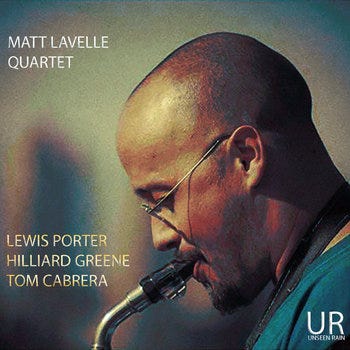
Many Jazz musicians need a vehicle to drive. Ornette called it the environment. For horn players, if we need and want to get focused in our music it’s most often quartets or quintets. Trios can certainly work for those inspired by Sonny Rollins and folks who like the openness. A quartet with piano, bass, and drums is a very specific focus. If you’re leading with a horn you are now the lead actor. You’re the main character in the story. The rhythm section is your crew. They are a car that wants to be driven by you. The drummer wields the power of how fast you go, and must be someone you trust down to the core. The bass may be the wheels touching the ground-try driving without the wheels. The piano player may be your best friend sitting next to you looking to support you by any means. The engine of the vehicle is perhaps your own heart and mind.
Horn players also have the sky of history above them when choosing a vehicle. For anyone feeling a quartet, the legacy of the John Coltrane quartet is simply the biggest mountain on the planet. Many of us will never posses the spiritual tenacity to reach such a peak. It may also be possible that the only way to get there is with a tenor saxophone. Nevertheless, with a picture of John Coltrane in my internal woodshed, I needed to form a quartet primarily to discover who I musically was in an environment where Coltrane reached the absolute heights of what the music can be, and how far it can reach.
My first attempt lacked this focus, and was more about finding out who I was musically after I had spent a decade playing straight-ahead and then moved downtown in 1999. My closest musical ally from my earliest days, bassist Francois Grillot was willing to join me in my search no matter where it led. Francois was very musically curious and loved to explore the unknown. I had met pianist and jazz scholar Lewis Porter at Tower Records, and Lewis loves to play period. I had also met drummer Federico Ughi through Daniel Carter. I always felt bad about the way we met. Federico was playing a duo with Daniel Carter at the Internet Cafe, and I was in the front row. I became transfixed by the vibe and got out my bass clarinet and started playing with them without asking them, just ridiculous, but Federico was cool with it. My first quartet attempt had a short run with its peak at the Brecht Forum when it was in Chelsea, I want to say in a building on West 27th on the 10th floor. There should be a documentary on all the music that was played up there. I’ll never forget my bass clarinet neck breaking off and sliding on the floor to the feet of Perry Robinson, who took me in the back to try and fix it mid set. I played a duo there with drummer Ryan Sawyer on a double bill with Rashied Ali (!) I met Ras Moshe there for the first time. I remember standing in the back with Raphe Malik and Roy Campbell, who were discussing the deeper reality of the jazz life. My quartet performance exists on a mini-disc in a shoebox in my basement. I just couldn’t get the feeling right for myself and I changed it to Anders Nilsson on guitar, and I added percussionist and flute player Atiba Kwabena Wilson, that I knew from Roy Campbell’s jam session at the Lenox Lounge in Harlem. The result was my second album Trumpet Rising Bass Clarinet Moon. Have 4, want 6 on Discogs-really? Trumpet Rising is actually an important album in my development. Two of those pieces had big time chord changes, but I was experimenting with alternate fingerings that led to microtones, not a comfortable combination (I always saw microtones as vocal blue notes). My bass clarinet chops were not stable on this live recording, made by Steve Tintweiss, a bass player that played with Albert. My playing however had a real honest and dirty vibe, and the band was straight up churning but wildly open. I told a story about a ballad I wrote before I played it called Summer Snow-a fantasy about when NYC was covered in 3 feet of snow on the hottest day of the year, leading to NYC becoming enveloped in complete silence.
For context, during this time I had been the jazz buyer at Tower Records and then Tower went bankrupt. I was living on 50th at and 10th avenue with a roommate then who had a rent control. May he rest peace, Keith was a very rugged, very sensitive, gay alcoholic. We were friends and he would be drunk listening to me practice for hours and hours. I was living on the edge, busking and trying to survive from playing. My periods of this level of life intensity proved to me that I’m about 11% as strong as Sonny Simmons. This was real life movie shit.
I was still in pursuit of discovery through the quartet vehicle, but looking to switch it up somehow. I had met the great pianist Chris Forbes and Francois was down to roll with me again. Chris and I were always talking about trying to merge Latin music with free jazz. I had the idea to investigate this further and launch a quartet spaceship with Chris, Francois, and drummer Andre Martinez that had played with Cecil Taylor for a long time. The flip and wild card was that I asked Andre to only play congas. I called this group Morcilla, and we played all over the LES and Brooklyn, playing totally free. I have 13 mini-discs of Morcilla. When we went to the studio however, the composition bug returned and I went with all tunes flipping the vibe once again. The Manifestation Drama is another album that I’m satisfied with. It’s a snapshot of right where I was in 2004. Most people haven't heard it, but it contains some real dynamic and emotional discoveries. Sabir Mateen asked “Where’s the Latin?” and he was right of course. The original idea never really came through. The concept that I had established for myself now was free improvisation coming from my written music. My music was not about bop lines or free bop lines, it was more about world creation and soundscapes. My music has always been somewhat cinematic, and exploring the worlds within.
The title of the Morcilla record haunts me. The Manifestation Drama was about the maddening desire to live my music to the point where it became my full time reality, something I was really struggling with at the time. Having worked full time since high school and going nowhere in my mid 30’s, I had could not rationalize it, and had a nervous breakdown of sorts. I went to Rincon Puerto Rico to decide if I was going to live a life of music one way or another. I went to a rocky deserted beach like area and just went out into the ocean. The current was far stronger than I considered and in the blink of an eye I went from 30 feet out to 100 feet out. I was being pulled out further but I had just enough leg strength to slowly, very slowly, work my way back trying not to panic. Perhaps Albert Ayler himself guided me back to shore. I collapsed on the shore with the discovery that the music was far more important than I knew, and that music was my life. I’m still working full time at 56, in fact I have to stop writing now and catch a bus to work, but I’ve learned after many years of struggle not to resist my path in life.
After all, I’m the one that wrote it.
The next stop in my search piloting a quartet, I let Morcilla go and called one of my main partners over the years, Ryan Sawyer on drums. Ryan is a true original and explorer. He’s one of the few drummers I’ve heard take a solo on a ballad. His presence led to music unlike any I’ve ever played, and music I want to return to. Francois and Chris were still with me. The crazy thing is that this quartet only played together once, and it was filmed by Windows Have Eyes. Watching these videos recently left me stunned at how different the music was. Here’s Faith, Valentines Day, and 7L Stomp. These move from unfettered darkness to defiant light. I’ve got to get back to more non-agenda music where you may write but the music tells you we’re going over here even though you’ve never been there and don’t know what will happen. Trusting music is something I’m still learning from William Parker.
These pieces were all based on the aftermath of being so lonely that I entered an impossible relationship that inevitably collapsed where I ended up living in a room in Washington Heights, 7L. I was also fired from California Psychics for being too honest, true story. My buddy Rogelio and his wife Mireya were an older Dominican couple that gave me a room for $150 a week cash. I was there for several years and became like family. They let me practice, and when I was sick Mireya would make me chicken feet soup. I was really living on the edge during this period being able to tour in Europe with Sabir Mateen and William Parker, but running on empty in NYC. After one tour, instead of trying to improve my living situation, I bought a TV and a bike. It’s called living in the moment. I found some stability working at Barnes and Noble and Sam Ash, and would ride my bike all the way up and down the West Side Highway with my horns on my back. This led me to a park that had a universe dial of sorts that became my primary practice space at the river. Playing music by a river is really my favorite place in the whole world. I still have a picture of this for some context:
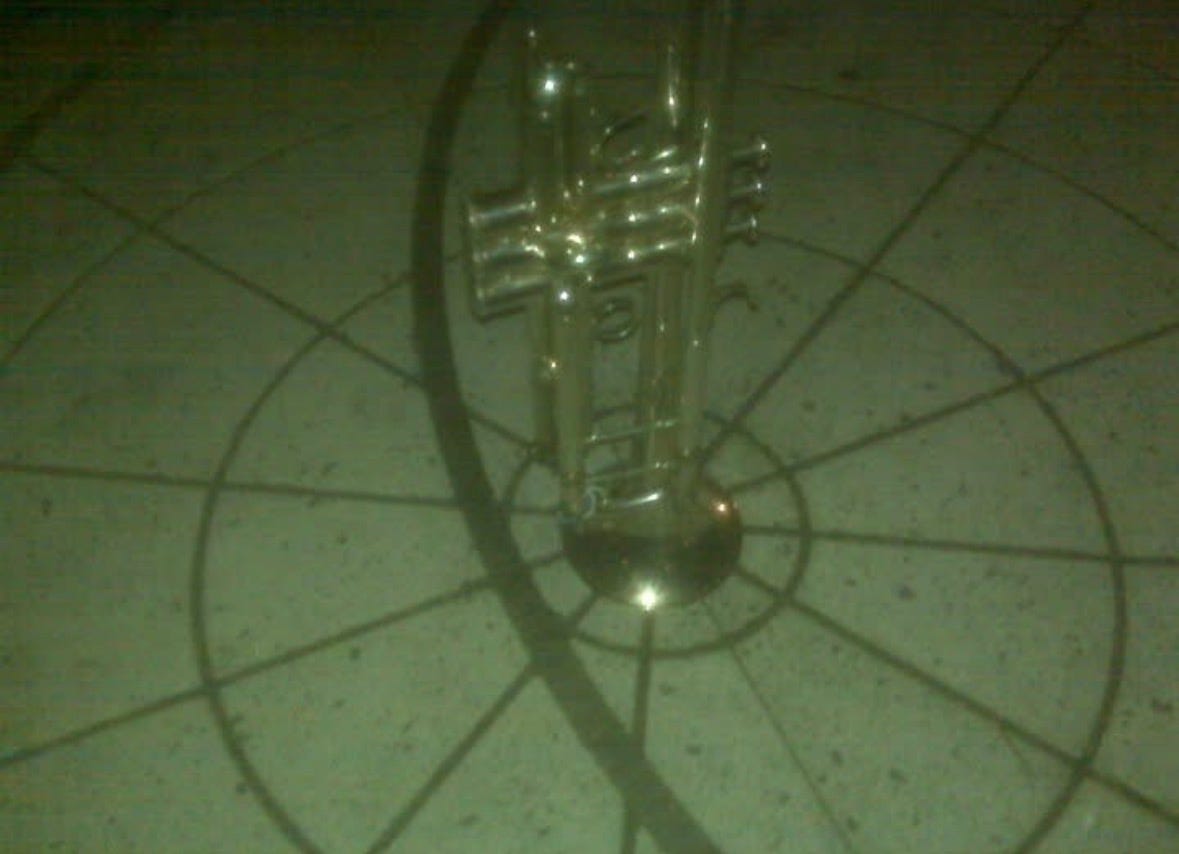
I was standing here playing when my cover photo was taken.
The culmination of my quartet journey was at hand. One of my oldest musical mentors, guitarist and harmony master Jack DeSalvo knew me when I was only 19 and only knew 1 scale. Jack had a new record label called Unseen Rain and we were talking about a recording. We agreed that a total switch up and new beginning might be the way to go. I was also very drawn to deal with the jazz side of my internal matrix. In pursuit of that vibe, I asked 3 stone cold jazz men to join me, and I mean stone cold. Hilliard Greene on bass, Tom Cabrera on drums, and Dr. Lewis Porter, pianist and jazz history master. We were a match and recorded The Matt Lavelle Quartet.
I really found my stride here. The flip was that my time with Ornette still had me at odds with my relationship with traditional harmony, and this was not truly a harmolodic situation. Lewis and Hill walked the line with me, and Tom laid it down so that I could search with confidence with my own spiritual swag. The opener, Matt’s Mode won an award for most modern composition of the year from a jazz magazine in the UK. I’ll even go full jazz academia and drop it here:
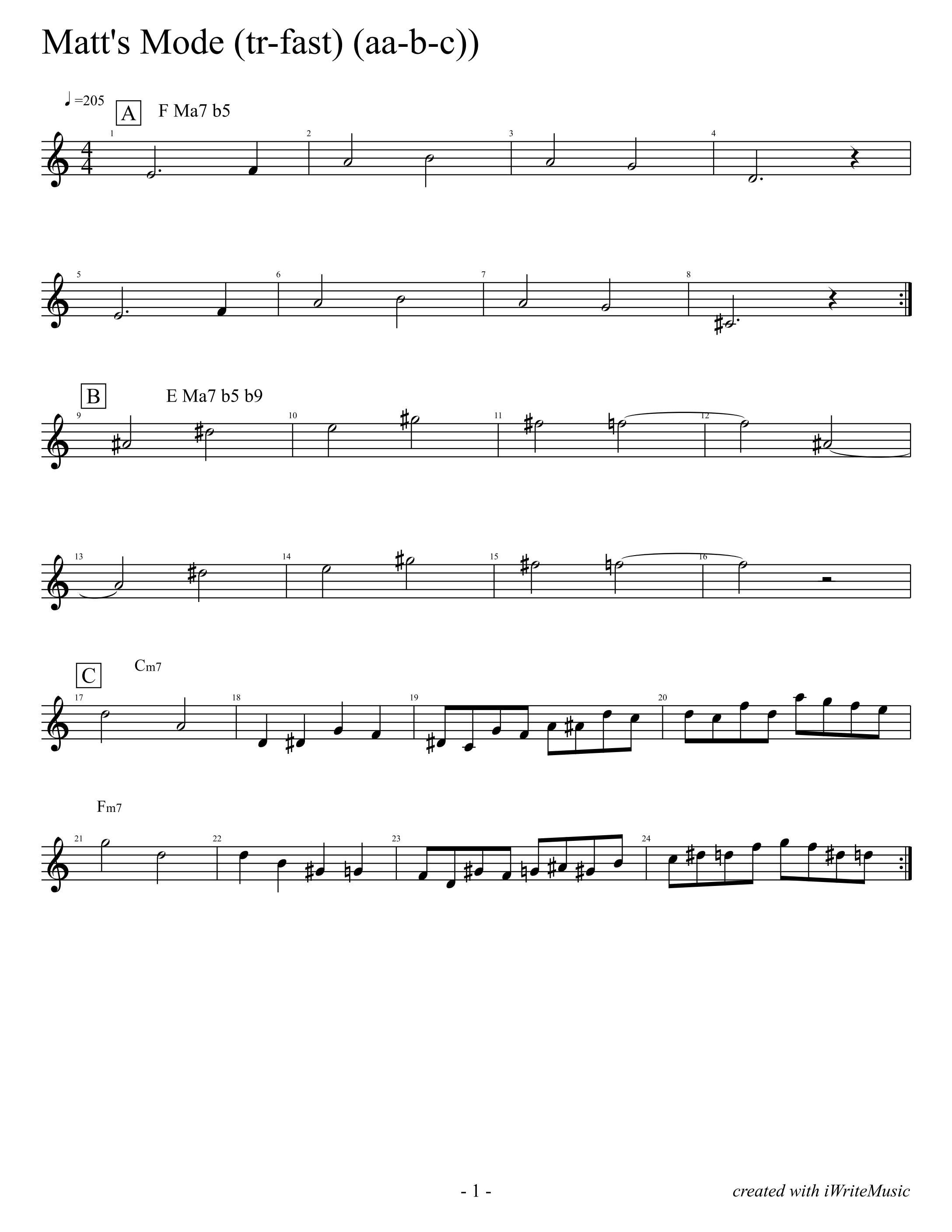
The flip is that after the Head, we were free to change keys at will but still use the modes in A and B. I ditched C in the studio.
Tamir Rice was written for Tamir after he was murdered by Timothy Loehmann in 2014, and is clearly coming from Coltrane’s Alabama, but on alto clarinet. Matt Bop was actually the most OC thing on the album, with my own free bop line and trying to use it rather than bop harmony. I’ve been threatening myself with making a standards album for years. The thing is that when I do that all this Lester Young stuff starts happening, but I’ve been writing my straight ahead language for a long time on the sideline. No More Shootings was and is a plea to stop what is an everyday occurrence in America now. Fear Has Got To Go was a defiant strut that really got to the heart of the group and was our go to on live concerts. Taps was for my risen brother-in-law, Michael Tapera in Zimbabwe. Taps was a truly special man who uplifted all those around him and was beloved and deeply respected. His passing left a crater that can never be filled.
I was performing quite a lot with my quartet. Besides my 12 Houses Orchestra, it was my lead ensemble. The first album was well received, and Jack was down for a sequel. Like all artists, I had to continue from where I left off and Hope was the result. People slept on Hope, but it’s an honest statement with bright moments. I had a picture of Roy Campbell next to me in the studio. This was one of those days when my horn polygamy caught up with me somewhat. My brass embouchures got tired from all the clarinet work. To flip my own script I led off with an original with changes. The Sideline is a contrafact of Wayne Shorter’s Infant Eyes in a different key and sped up. I didn’t do it to prove anything, I had to write the piece in pursuit of my jazz history masters degree. The sideline is a dark title, as I still struggled with my daily reality. Hope is one of my best pieces and I asked Tom Cabrera to play a protest march that swings, and there it was. I wrote a legit blues head for the studio cat Micio from my job at Michiko studios in NYC. I only found out later that Micio means cat in Italian. Black and White is my best composition, and is a focal point on my next 12 Houses record, more on this later. Trayvon Martin is the next piece about another murder in America. Trayvon fought back, and I wish he won that fight for his life. I finished the album trying to capture the elusive eternal supernatural force of Love. The vamp in the opening is actually a Monk piano voicing from Ugly Beauty, but most people wouldn’t catch it spread out like that. Perhaps the best thing about Hope was that a photo of my Grandfathers bust of Dr. Martin Luther Ling is on the back cover.
A few years later, the quartet vibe returned for a final run at Unseen Rain, but my working quartet was no longer gigging. I went back to the beginning and got my brother Chris Forbes on piano. Hill and Tom returned for the final album. Then the supreme flip, Jack and I agreed to ask the late great Claire Daly to join us on bari sax and make it a quintet. I’ll be damned if I didn’t once again name my daily life in a piece, as I was a full time hospital housekeeper at the time. I may stack the experience-cleaning operating rooms after bloody and violent surgery, being the ER cleaner, and the trash man for the whole hospital. Amputations have to go somewhere after processing. Jack helped me though, and called the album The House Keeper, as I was really the keeper of the 12 Houses. As usual, my music has been my own light in the dark, and the House Keeper album is loaded with both the darkness and the light. Church In Chinatown was a piano piece I wrote for myself to play piano with Daniel Carter and is very sensitive. Claire really schooled me here unintentionally as my solo was very aggressive and contrary to the vibe. She told a musical story with the perfect amount of notes. I believe her solo to be an example of the highest level of her art. Trust was a throwback to Matt’s mode, but with just a melody to work with. It’s like Ornette playing Impressions. Harmolodic Monk was a written piece using Monk’s language as I heard it, and a nod to my recording Harmolodic Monk. Finally, before the Last Sunset, I described the scene to the group:
“Every story within the human race has been lived and told. The story of Earth itself is now complete. We’re watching the last sunset. After we play, if you fly a spaceship to where Earth would be, it’s not there. Earth no longer exists.”
There’s video of the quintet filmed by Westbury Arts. The Housekeeper, Harmolodic Monk, Church In Chinatown, Trust, Last Sunset, and Housekeeper Blues.
The ML4 did perform quite often in NYC. Fortunately, two of these concerts exist on YouTube. If I couldn’t book one, we would stream one on my dime to keep the vibe going. We never toured. Our peak was playing at a church in Harlem arranged by the great Craig Harris. Here’s what I know to exist: Live At Scholes Street, and Live At Jazz Habitat. The one that I can’t locate was live at Shapeshifter, and that one was HOT.
I did make one quartet album without piano, and Ras Moshe on tenor saxophone. I in fact had my only tour as a leader in Sweden with this group. Francois was on board and Ras and I have been brothers since our meeting at the Brecht. The drummer here Bob Hubbard was great, but he couldn't make the tour, and I asked Dave Miller to do it, and he played great. I seem to always have had some kind of collapsed love life thing happening, and during the time of this album I was on the verge of moving to Italy to be with a great bass player there that I had met on tour with Sabir Mateen. The conflict within me was great, thus the title Goodbye New York, Hello World. I remember William Parker liked the title. Rose was the name I gave my cornet that I had gotten from my cousin Lance. You're The Tonic is one of my favorite things I have ever done. The title was from an Ornette riddle. I asked the guys to stay with me on the longest solo I ever attempted on swinging free bop. The thing is that François recorded the bass very strong in the mix, it was recorded in his kitchen. It was here that I discovered what harmolodic bass can truly be. Francois listened so closely and co-created with me to such a level that it’s almost a duet. I also asked the guys to push the conflict and contrast of so called in vs out leading to one of my favorite Ras Moshe solos. I’ll never forget selling a soprano sax to Ras Dad and talking to him at the sales counter when he said “Cut the bullshit and bring me the horn!” There’s great tunes and moments throughout this record. It got 2 good reviews and was then dispatched to the jazz abyss like so many self-published records these days. I’m happy I made it and believe in the music on it strongly. The OC quartet format is my favorite one, and should I tour again that’s what I intend to use.
Finally, to bookend my stack here (during a 9 day straight work bid during a Philly downpour no less) a rundown of my trio work. This could be a whole other stack, but I figure while I’m here…
My first real improv experience was in a trio, a collective vibe, that we called Eye Contact. Ryan Sawyer and Matthew Heyner on bass, we had the whole band story. Our very first time playing together we found a really unique group vibe, and it was released on Utech Records, on a limited run underground vibe. We had a regular hit at Zebulon in Brooklyn that was deep as F. Pieces from Zebulon were released on Embracing the Tide. Eye Contact toured the mid-west on a shoe-string, and peaked in Glasgow, Scotland. We made one studio album, and recorded another one that never made it out. I’ve got 12 or so live recorded concerts, and maybe one day they will make it out. Eye Contact has some of my peak free playing, and for me is my own benchmark of if I’m really playing or not. I was stunned to discover much of our concert in Glasgow here online! Discogs has Eye Contact With God and War Rug. Be warned, the studio album on KMB War Rug is dark. The live material is bursting with blinding light.
In contrast to Eye Contact, I led a trio recording and a trio at the same time called Spiritual Power. SP was a big deal. It was on Silkheart, a major European free jazz label with liner notes by Steve Dalachinsky, and a painting album cover by Bob Thompson. I thought I had arrived on the international stage with this recording, but it never landed like that. I wanted a rhythm section to push me through my jazz side with my tunes at the highest levels possible. Hilliard Greene and Michael T.A. Thompson were the fire, and when listening to the record, Ornette said “One of the reasons you sound so good is the high quality of your environment.” I know of no live videos of Spiritual Power, which played live at least 3 times. I made it a point to play one concert entirely on bass clarinet. SP has a lot of flugelhorn, and a lots of real high note playing that I’ve never done anywhere else. Roy Campbell Jr. was my inspiration here, and he dug this album. The album has some of best early tunes. End Times is a blatant attempt to use wide intervals melodically. Hey Liduva was for Liduva, and another one of my failed Love relationships. Seth Speaks was one of the first things I ever wrote about Seth being channeled through Jane Roberts. Tom Cabrera turned me on to the book Seth Speaks and this was my awakening to deeper reality.
Finally, I recorded In Swing We Trust, and The Big Picture. Swing was a free trio with Tom Cabrera and Phil Sirois on bass. It’s non-hostile, non-confrontational free swing playing. It’s I daresay peaceful. There’s some melancholy in their too. A gentle wading and affirmation through shallow waters of loss on a clear day. For me this is my coming out on e-flat piccolo clarinet, playing Giuseppi Logan’s actual horn. Playing in the upper register like this without straining, enables me to sing in a way the trumpet will never allow without going full Maynard. Picture was my attempt to lead a trio with 2 younger next generation musicians, and we had a good, but short run, that ended during Covid. The idea was to record all music that was written from a spiritual perspective. Music by William Parker, Albert, and my late friend Reverend Nat Dixon, a tenor man with his own literal congregation. Picture is live and the written music is a springboard for aggressive free playing from a spiritual place on clarinets, but reaching a place of embodied faith on trumpet and flugel.
Thank you for spending time with me this week, and I leave folks with He'll Be There For You.
Subscriptions are needed and truly appreciated.
Peace and Music
ML
Cover photo by Taras Logvin
First up, I love that photo of at the head of your piece.
Second, I love your stream of consciousness style!
You certainly have stories to tell. Up or down, you’ve never lost your spirit even you thought you lost it. Your music is an inspiration to all of us. Yes! You take us there!